Best Antioxidant Supplements (2026): What Actually Has Clinical Support
The word "antioxidant" moves a lot of product. It sounds scientific, implies protection, and is vague enough to attach to almost anything. But most antioxidant supplements are sold on biochemistry that looks good in a test tube and falls apart in human trials. This comparison focuses on five specific compounds with genuine clinical evidence for specific outcomes, not generic "free radical protection" claims that mean nothing measurable.
Antioxidant Compounds Compared by Clinical Evidence
| Compound | Primary Mechanism | Clinical Evidence Level | Bioavailability Challenge | Effective Dose | Monthly Cost | Best For |
|---|---|---|---|---|---|---|
| CoQ10 (Ubiquinol) | Mitochondrial electron transport, lipid-phase membrane protection | Strong (Q-SYMBIO trial, statin myopathy meta-analyses) | Moderate. Fat-soluble, needs lipid carrier. Ubiquinol > ubiquinone after age 40. | 100-300mg/day | ~$25-50 | Statin users, adults 40+, heart failure adjunct |
| Astaxanthin | Lipid-soluble carotenoid, spans full cell membrane bilayer | Moderate (skin elasticity, exercise recovery, lipid profile trials) | Low challenge. Fat-soluble, well absorbed with meals. | 4-12mg/day | ~$15-30 | Skin photoprotection, exercise recovery, general cellular defense |
| Liposomal Glutathione | Master intracellular antioxidant, detoxification cofactor | Moderate (Richie 2015 showed oral can raise blood levels; liposomal form needed) | High. Standard oral glutathione is destroyed in gut. Liposomal delivery required. | 250-500mg/day (liposomal) | ~$35-60 | Liver support, detoxification, immune function |
| Vitamin C (Buffered) | Water-soluble radical scavenger, collagen cofactor, vitamin E recycler | Strong (Cochrane 2013 for cold duration; deficiency correction well-established) | Low challenge. Well absorbed up to ~500mg, excess excreted. | 200-500mg/day | ~$5-12 | Smokers, athletes in heavy training, low fruit/vegetable intake |
| Resveratrol | Sirtuin pathway activation (SIRT1), NF-kB modulation | Moderate-Low (promising mechanistic data, inconsistent human outcomes) | High. Under 1% oral bioavailability as free resveratrol. Needs enhanced delivery. | 150-500mg/day trans-resveratrol | ~$20-45 | Longevity-oriented consumers comfortable with earlier-stage evidence |
Evidence levels reflect the volume and quality of published human clinical trials for the specific indication listed. Monthly costs reflect mid-range quality products at effective doses, sourced from major US retailers as of mid-2026. "Best For" identifies the population or use case with the strongest evidence match, not the full range of marketing claims made about each compound.
Our Honest Assessment
The Honest Framework: What "Antioxidant" Actually Means (and Doesn't)

A compound is an antioxidant if it can donate an electron to a reactive oxygen species. That is chemistry, not a health claim. The supplement industry has conflated "antioxidant activity in a test tube" with "health benefit in a human body," and the two are not the same thing.
Your body already runs sophisticated antioxidant defense systems. Glutathione, superoxide dismutase (SOD), catalase, and thioredoxin reductase handle the vast majority of oxidative stress management. These endogenous systems are orders of magnitude more important than any exogenous supplement you swallow. The compounds worth supplementing are the ones that either (a) support these endogenous systems directly, or (b) have demonstrated clinical benefits through specific, non-antioxidant mechanisms that happen to also involve electron donation.
This is why CoQ10 works for heart failure (it is literally part of the mitochondrial electron transport chain, not just a generic "antioxidant"), why astaxanthin works for skin (it spans the full phospholipid bilayer in a way no other carotenoid does), and why mega-dose vitamin E failed catastrophically in the SELECT trial (it disrupted rather than supported the body's own redox signaling).
What Does Not Work: The Failures Worth Knowing

Before spending money on antioxidant supplements, understand what the large trials have shown does not work or actively causes harm:
- High-dose vitamin E (400 IU synthetic alpha-tocopherol): The SELECT trial (35,533 men) showed a 17% increase in prostate cancer risk. The era of vitamin E mega-dosing is over.
- Beta-carotene supplementation in smokers: The ATBC trial (29,133 male smokers) showed 18% increased lung cancer incidence with 20mg/day beta-carotene. If you smoke, do not take beta-carotene supplements.
- Generic "antioxidant blend" products: No clinical trial has ever shown that a proprietary blend of 20+ antioxidant compounds at sub-therapeutic individual doses produces a measurable health outcome. These products exist because "antioxidant" is a compelling marketing word, not because the blended approach has evidence.
- High-dose antioxidants around exercise: Ristow et al. (PNAS, 2009) showed that vitamin C and E supplementation blunted the metabolic adaptations to exercise training. If you train regularly, time high-dose antioxidants away from workouts or skip them entirely.
CoQ10: The Strongest Case
CoQ10 is not primarily an antioxidant supplement. It is a mitochondrial energy substrate that also happens to protect mitochondrial membranes from lipid peroxidation. The clinical evidence comes from its role in cellular energy production, not from generic free-radical scavenging.
The Q-SYMBIO trial (Mortensen et al., JACC Heart Failure, 2014) randomized 420 patients with chronic heart failure to 300mg/day CoQ10 or placebo. Over two years, the CoQ10 group had 43% lower cardiovascular mortality (hazard ratio 0.58). This is one of the strongest positive supplement trials ever published for a cardiovascular endpoint.
For statin users, CoQ10 supplementation addresses a specific mechanism: statins inhibit HMG-CoA reductase, which sits upstream of both cholesterol synthesis and CoQ10 synthesis. Statins reliably lower CoQ10 levels, and supplementation at 100-200mg/day is biologically rational even though the clinical trial evidence for statin myopathy relief is mixed (modest benefit in meta-analyses).
Astaxanthin: Multi-System Evidence
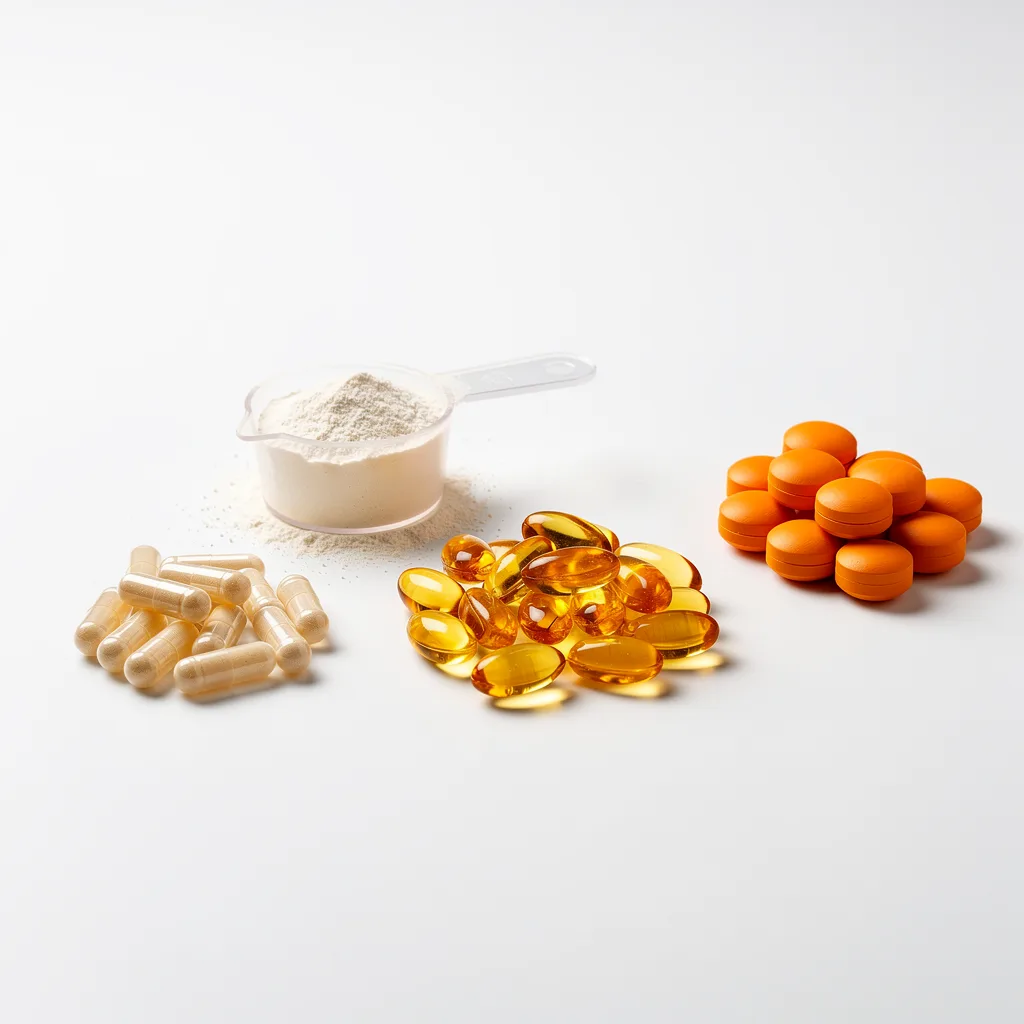
Astaxanthin is a carotenoid from the microalga Haematococcus pluvialis. What makes it structurally unique: it spans the full width of the cell membrane phospholipid bilayer, protecting both the interior and exterior surfaces. No other common dietary antioxidant does this.
Clinical trials at 4-12mg/day show benefits across several endpoints: skin elasticity and wrinkle depth (Tominaga et al., 2017), exercise-induced muscle damage recovery, and modest improvements in lipid profiles. The evidence base is smaller than CoQ10's but growing, and the compound is generally well-tolerated with no significant adverse effects at studied doses.
Liposomal Glutathione: The Delivery Problem
Glutathione is the body's master intracellular antioxidant. You cannot meaningfully raise tissue glutathione by swallowing standard glutathione capsules, because digestive enzymes break the tripeptide apart before absorption. For years, the supplement approach was to take precursors (NAC, alpha-lipoic acid) that your body uses to synthesize its own glutathione.
Liposomal delivery changed this equation. Richie et al. (European Journal of Nutrition, 2015) showed that liposomal glutathione at 500-1000mg/day significantly raised blood glutathione levels over 6 months. The liposomal phospholipid coating protects glutathione from digestive breakdown and allows intact absorption.
The caveat: liposomal products are expensive, and the quality varies enormously. Not all products marketed as "liposomal" use true phospholipid encapsulation at effective particle sizes. Look for brands that publish particle size data or have third-party verification of their liposomal delivery system.
Vitamin C: Effective but Overhyped
Vitamin C is the most-studied antioxidant supplement and also the most over-marketed. The Cochrane 2013 meta-analysis (29 trials, 11,306 participants) established that regular vitamin C supplementation modestly shortens cold duration (about 8% in adults) and reduces cold incidence in people under heavy physical stress. It does not prevent colds in the general population, and it does not prevent cancer or cardiovascular disease.
The effective dose is 200-500mg/day. Plasma saturation occurs around 200mg; doses above 500mg produce minimal additional tissue levels because renal excretion increases proportionally. Megadosing (2000mg+) wastes money and increases risk of GI upset and oxalate kidney stones in susceptible individuals.
Buffered forms (calcium ascorbate, sodium ascorbate) are gentler on the stomach but not more effective. Plain ascorbic acid is well-absorbed and the cheapest option.
Resveratrol: Promising Mechanism, Disappointing Translation
Resveratrol activates SIRT1, the same longevity pathway activated by caloric restriction. In cell culture and animal models, the results are dramatic. In human trials, the translation has been inconsistent at best.
The core problem is bioavailability. Less than 1% of oral resveratrol reaches systemic circulation as free (unconjugated) resveratrol. The rest is rapidly glucuronidated and sulfated by the liver. Enhanced delivery systems (micronized, liposomal, co-administration with piperine) improve this somewhat, but the fundamental pharmacokinetic challenge remains.
Timmers et al. (Cell Metabolism, 2011) showed 150mg/day improved metabolic parameters in obese men over 30 days. But follow-up studies have been inconsistent, and no large outcome trial exists. Resveratrol remains in the "biologically interesting, clinically unproven" category for most endpoints. Consumers comfortable with earlier-stage evidence and who want to bet on the sirtuin hypothesis may find it worthwhile. Those wanting proven outcomes should start with CoQ10 or address lifestyle factors first.
How to Choose: A Decision Framework
- Define a specific goal. "Antioxidant protection" is not a goal. "Support mitochondrial function on a statin" is. "Reduce exercise-induced oxidative damage" is. "Support liver detoxification" is. Match your goal to the compound with evidence for that specific outcome.
- Check the dose against the trial. If a product provides 50mg CoQ10 but the Q-SYMBIO trial used 300mg, you are not replicating the evidence.
- Prioritize form. Ubiquinol over ubiquinone for CoQ10 (especially after 40). Liposomal for glutathione. Trans-resveratrol specifically (not cis). Microalgae-sourced for astaxanthin.
- Do not stack antioxidants indiscriminately. More is not better. The body's redox signaling requires some reactive oxygen species. Blunting this signaling with a shotgun of antioxidant supplements can impair exercise adaptation, immune function, and cellular repair pathways.
- Food first. Berries, dark chocolate, green tea, olive oil, colorful vegetables. The food-matrix antioxidant delivery system has consistently outperformed supplements in observational data.
For comprehensive guides covering all supplement categories, in-depth supplement guides by category maintains detailed category reviews. For real-world experiences with specific products, real consumer supplement experiences collects user feedback across antioxidant and other supplement categories.
What to Watch Out For
Antioxidant supplements are not FDA-approved for diagnosing, treating, curing, or preventing any disease. High-dose isolated antioxidants (vitamin E, beta-carotene) have shown harm in large clinical trials. CoQ10 may interact with blood thinners (warfarin). NAC interacts with nitroglycerin. Resveratrol can affect drug metabolism via CYP enzyme modulation. Antioxidant supplementation around exercise may blunt training adaptations. Do not combine multiple antioxidant supplements without understanding potential interactions. Discuss any new supplement with your healthcare provider, especially if you take prescription medication.
Explore Our Other Reviews
Browse independent reviews across all supplement categories, from hair loss to joint health.
Read FAQ